Board Member Spotlight: Dr. Oliver Griffin
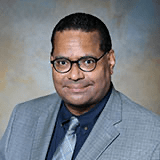
Oliver Griffin is the President of the United Nations Association of Rochester (UNAR), serving in this role since 2018.
He is an Associate Professor of German and European History at St. John Fisher University, with extensive academic experience in Germany, including research and study at the University of Freiburg. With parents in the Foreign Service, he grew up with an international background. Griffin is passionate about global affairs, human rights, and promoting UN missions. He has been instrumental in growing UNAR’s Model United Nations Conference and maintaining the organization’s commitment to political neutrality while addressing critical global issues like refugee support and international peace.
Dr. Griffin chatted with our Social Media Intern Roisin this summer about his commitment to UNAR and the mission. Here is their conversation!
Why did you choose to join the UNAR as a board member?
Well, Margaret Corbin approached me and convinced me to join. I’ve always had an interest in international affairs. I’m a “Foreign Service brat”, so I spent part of my life abroad, which also in part, explains my interest in German history. So I’ve lived in other parts of the world, and this accorded then the UNAR, as Margaret described it, with my more general interests.
What does the UNAR mean to you? Specifically, in your opinion, what is the main goal of the organization?
The main goal of the organization, in my opinion, is to promote within the Rochester metropolitan area, awareness of the mission of the United Nations, and in particular, global peace and human rights. UNAR, as you know, engages in three main activities. Namely, number one, it organizes and hosts the annual Model United Nations Conference on the campus of St John Fisher University, in the spring. Number two, it commemorates UN Day, October 24 typically, by organizing an event as close to October 24th as possible. And thirdly, we have an internship program.
How has UNAR’s events and activities evolved since you’ve been on the board?
Attendance at our Model United Nations conferences has not only remained constant, but in fact, grown a bit. This last year, we had more than 600, which is very gratifying, as you probably know, this means that every year, roughly five to 600 pupils from not just Rochester but actually regional high schools in Western New York, about three dozen or so then convened for two days on the campus of Fisher.
We have established in part in response to your question, also a working relationship with Fisher since I joined the board. Not just by way of observation, but we signed a memorandum of understanding. So we certainly value this close relationship with Fisher, what I like to call a collaborative endeavor. For example, we always invite them to the opening ceremony of the annual Model United Nations Conference, both the provost of Fisher and my dean to welcome the students so that they can see how, you know, I and UNAR interact with the larger community. So I would say that that is certainly, that’s probably the single greatest change that I’ve noticed is the steady and perhaps even growing attendance and interest in the Model United Nations Conference, which we also attribute, then, in large measure, to the sterling work performed by that coordinator, Erin Moses high school teacher. So she deserves a lot of credit in that regard.
Under your leadership, can you recall a time when the organization faced a major challenge, and how you responded?
Yes, it was during COVID, because obviously we had to cancel our events. First the MUN conference in 2020 that didn’t convene, and then it was a much reduced conference in 2021 so I think that’s a significant challenge. Then we face a significant and ongoing challenge in which we’ve addressed, well with your very presence, in recruiting interns. The number of interns used to be larger, and we organized that on a trimester basis, spring, summer and fall. But the number of interns has declined a bit, unfortunately over the years. So we work to address that, trying to engender interest in regional colleges and universities like my own. Looking back a little bit much farther, if I may, very briefly, UNAR used to enjoy much more support from area companies and firms. Now this takes us back a generation, and more especially during the Cold War, when many perceived the United Nations as more important, or quite important, and so UNAR could draw on a lot of sponsorship or generate a lot of sponsorship from area companies. That has declined, unfortunately, but that began decades ago. So that’s another challenge that we face, trying to generate interest and sponsorship.
How do you see the legacy of UNAR continuing to evolve in the future?
That’s a very good question that hinges on, well, domestic and external political developments as we speak, conflict has be erupted in what is called the Middle East, thereby underscoring, I would say, very vividly, in addition to the ongoing war in Ukraine and the conflict in Gaza, the necessity for institutions like the United Nations, however negatively people may perceive them, to continue to engage in promoting human rights global peace, especially also in humanitarian endeavors. Feeding, housing, clothing refugees, resettling refugees of various nationalities into various parts of the world. So that will remain a challenge, given the current political climate, and again, I’m very careful to maintain a politically neutral stance, but clearly, obviously the domestic political climate in the United States. Regardless of the incumbent, the President will shape our work.
If you, or someone you know, is interested in joining the UNAR Board or our Internship Program to create positive change in our community, please contact us for more information.